
 EN
EN  NL
NL  DE
DE Hoe lang gaat een Core kiteboard mee?
Core kiteboards gaan 3-5 jaar mee bij normaal gebruik. Ontdek levensduur factoren en onderhoudstips.
 Ga naar de inhoud
Both kitesurfing and wingfoiling are spectacular water sports that involve being pulled by the wind, but there are distinct differences in equipment, technique and feel.
In kitesurfing, you control a large kite through lines attached to a bar; the power of the kite is transmitted to your waist through a harness. You stand on a board floating on the water, and the long lines allow you to generate tremendous power for high speed and big jumps.
Wingfoiling, on the other hand, uses a "wing" that you hold directly. The board is equipped with a hydrofoil, a kind of underwater wing, which, when you have sufficient speed, makes you literally float above the water. It feels like flying; you stand still far above the surface of the water and glide almost silently.
In the rest of this article, we dive deeper into both sports. We explain the specific equipment involved, how to learn to kitesurf or wingfoil, and list the main pros and cons. This will help you discover which discipline best suits your level, ambitions and circumstances. Finally, we'll show you how you can try out both sports through GoShaka's flexible subscription model, allowing you to determine which gives you the most enjoyment without a large investment.
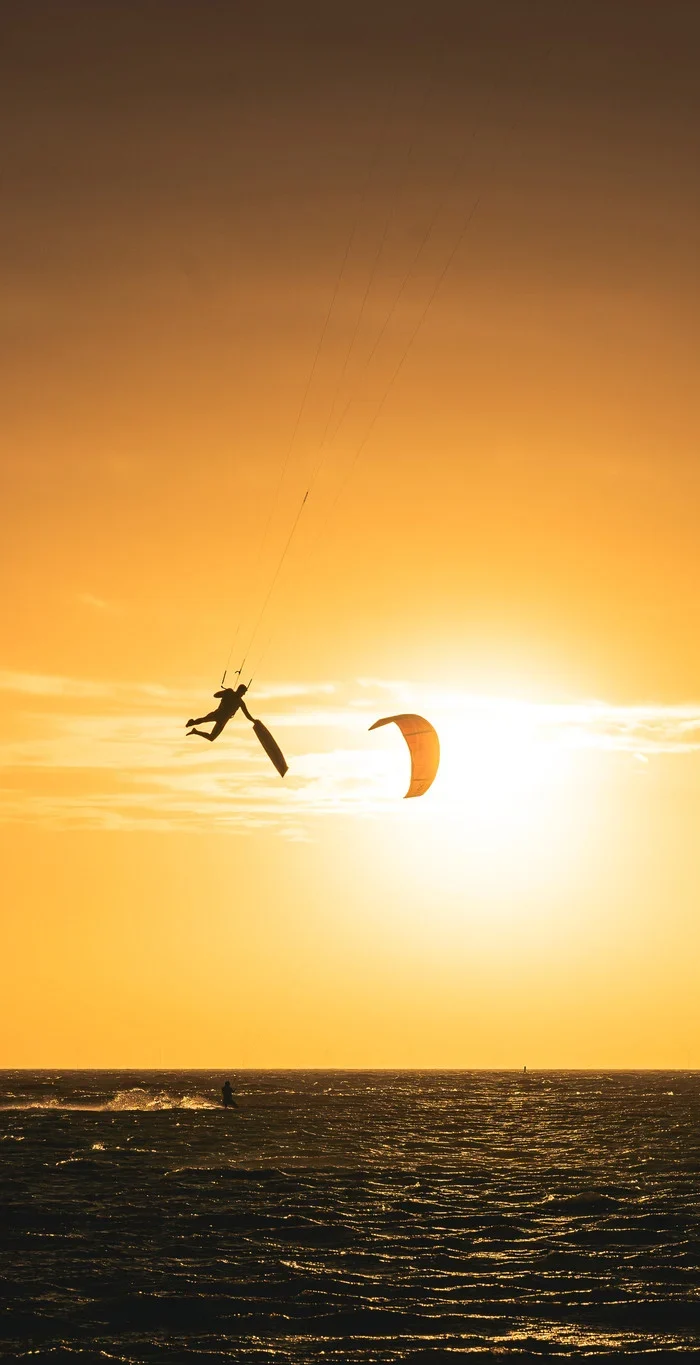
Kitesurfing is a water sport that involves being pulled by a large, inflatable kite that you control via long lines and a bar.
A harness transfers the power of the kite to your body, allowing you to glide across the water with relatively little effort. You stand on a board similar to a wakeboard or small surfboard and can choose a twintip or directional board depending on your style.
The sport originated in the late 1990s and grew rapidly thanks to the spectacular jumps and freedom to sail virtually anywhere there is wind and water.
Benefits of kitesurfing:
Kitesurfing requires a good base of kitesurfing lessons and control, but once learned it gives an unparalleled feeling of freedom and power.
Wingfishing is a relatively new discipline within water sports in which you sail on a foilboard with an inflatable "wing" in your hands. Without lines or trapeze, you sail purely on the power of the wind, giving you a lot of freedom of movement. The board has an underwater hydrofoil, which allows you to take off even with little wind and float almost silently over the water. The sport combines elements of windsurfing and kitesurfing but has its own flow.
Advantages of wingfishing:
In the next section, we'll go over the pros and cons of both sports and help you choose which discipline suits you best.
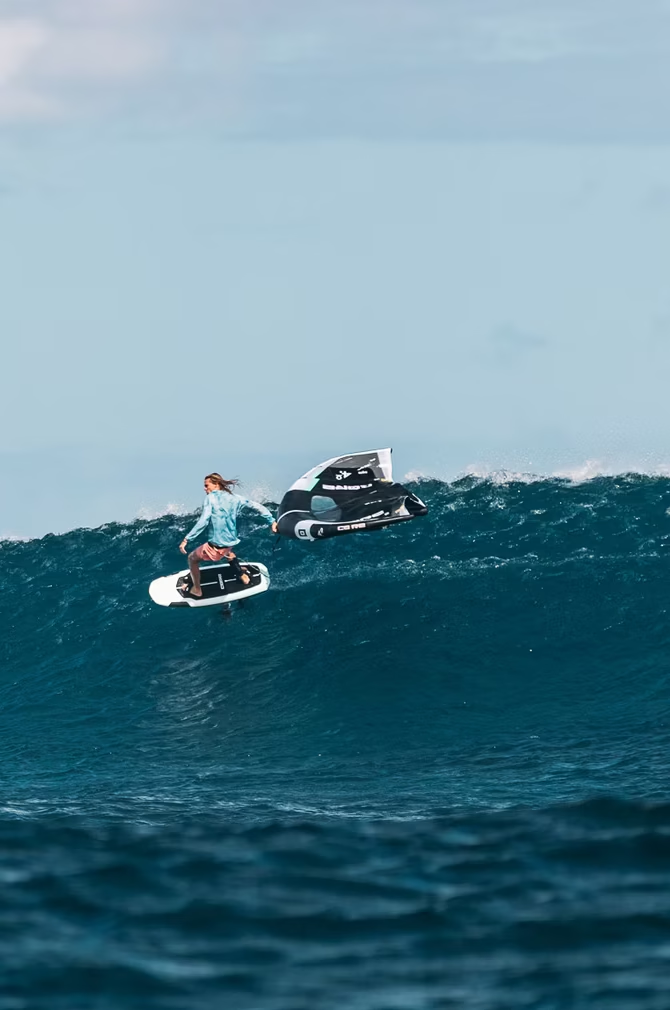
Kitesurfing is the sport for adrenaline seekers who like to jump high and try various disciplines. However, it requires more equipment, preparation and a tougher learning curve.
Wingfoiling is a bit easier to get started with; it offers a unique gliding experience and is ideal for those who want to get out on the water quickly.
The choice between the two depends on your need for adrenaline and often your age. Many young people opt for kiting, while older people are often more into wingfoiling.
Because the sports complement each other nicely, many water sports enthusiasts combine them: a wing for light wind days and a kite for stronger winds.

Core kiteboards gaan 3-5 jaar mee bij normaal gebruik. Ontdek levensduur factoren en onderhoudstips.
Ontdek de gemiddelde kitesurfsnelheden per niveau en leer hoe je veilig sneller kunt worden.
My girlfriend and I just wrapped up an epic 8-week kitesurfing trip across the Philippines, and it was an adventure full of incredible highs, a
Core biedt kiteboards voor elke rijstijl: freeride, freestyle, wave en foil. Ontdek welk model perfect bij jou past.
Ontdek het verschil tussen Core twintip en directional boards voor kitesurfen. Kies het juiste board voor jouw rijstijl.
Kitesurfen leer je sneller dan gewoon surfen, maar beide hebben unieke uitdagingen.

Want to test out your new kite first? Which can! Plan your Try & Fly!