
 EN
EN  NL
NL  DE
DE Kitesurfing in the Philippines: what it’s really like in 2026
My girlfriend and I just wrapped up an epic 8-week kitesurfing trip across the Philippines, and it was an adventure full of incredible highs, a
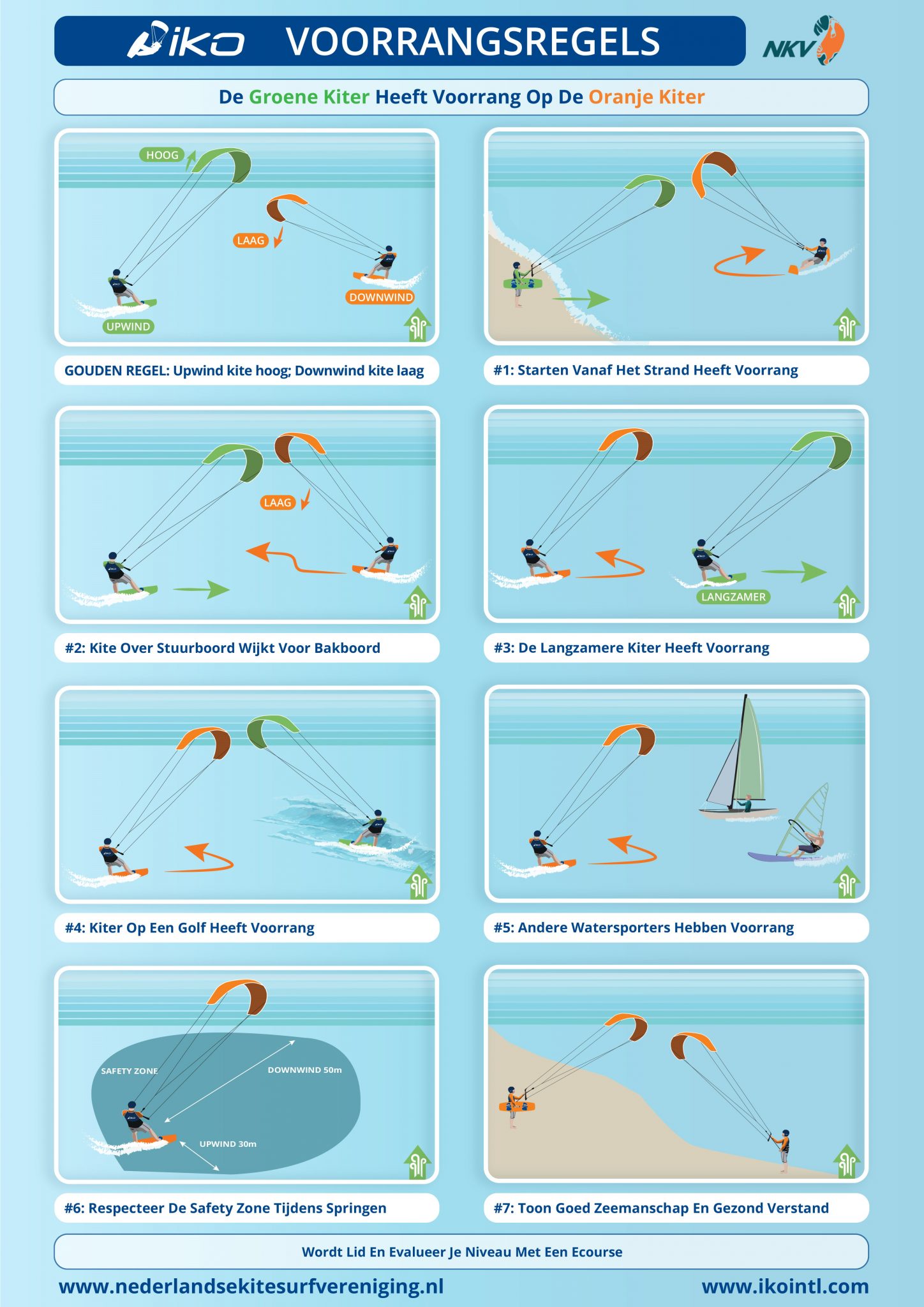
Priority rules play a crucial role in kitesurfing. These rules are there to guarantee safety and order on the water. With more and more kiters on the water, it is essential that everyone is aware of the priority rules. These rules provide clarity and structure, which can prevent accidents and collisions. In this knowledge article we will provide an overview of the most important priority rules in kitesurfing and emphasize their importance for a safe and enjoyable kitesurfing experience.
Wind direction: The kite surfer with the wind on his/her right has priority over the surfer with the wind on his/her left. This is called the “port-starboard” rule. In general, with your right hand in front (sailing to the right) you have priority over kite surfers with your left hand in front (sailing to the left).
Upwind kitesurfer: A kite surfer who sails upwind, or against the wind, has priority over other kite surfers who sail downwind. Downwind avoidance is always easier than upwind avoidance.
Approaching kite surfer: If two kitesurfers approach each other, the one who sees the other surfer from his/her back must swerve and give way. This helps prevent collisions and ensure the safety of both surfers.
Safety and beginners: Kitesurfers should always consider the safety of beginners and less experienced surfers. It is important to give them space and avoid getting too close as they may have less control over their kite and board.
Waves and obstacles: Kitesurfers who are near waves, reefs, beaches or other obstacles must give way to surfers and other water users who are already there. It is essential to ensure the safety of everyone involved and to prevent accidents.
The Dutch Kitesurfing Association has made a beautiful picture where all the rules are clearly depicted:
My girlfriend and I just wrapped up an epic 8-week kitesurfing trip across the Philippines, and it was an adventure full of incredible highs, a
Kitesurfing has become one of the fastest growing water sports in recent years. The Netherlands now has more than 15,000 active kitesurfers, and everywhere along
Wingfishing or kitesurfing. Which suits you? Are you hesitating between kitesurfing and wingfoiling? Both water sports give you the freedom of wind and water, but the
Kite rentals in Tarifa Go prepared for your trip to Tarifa with top quality rental gear. Find out why renting from GoShaka is cheaper and more relaxed than
What is the best kiteset for beginners? A complete guide Want to start kitesurfing, but don't know what gear you need? No
Buy vs Subscribe Kitesurf without worry: Buy or Subscribe - Which suits you? As a kitesurfer, your gear is essential. The right board and the

Want to test out your new kite first? Which can! Plan your Try & Fly!