 Ga naar de inhoud
 NL
NL  EN
EN  DE
DE My girlfriend and I just wrapped up an epic 8-week kitesurfing trip across the Philippines, and it was an adventure full of incredible highs, a few travel hurdles, and plenty of lessons learned. Traveling as a kiting couple, we hauled our own gear across ferries, flights, and tuk-tuks. We brought a quiver of four kites between the two of us: a 7m², 9m², 10m², and a 12m². If you are planning a kite trip to the Philippines this year, you should know that while the islands are postcard-perfect, the wind isn’t always a sure thing. In fact, we ended up primarily using our 10m² and 12m² kites for most of the trip. Here is our honest, no-filter guide to the spots we hit, the gear we used, and what you need to know before you book your flights.
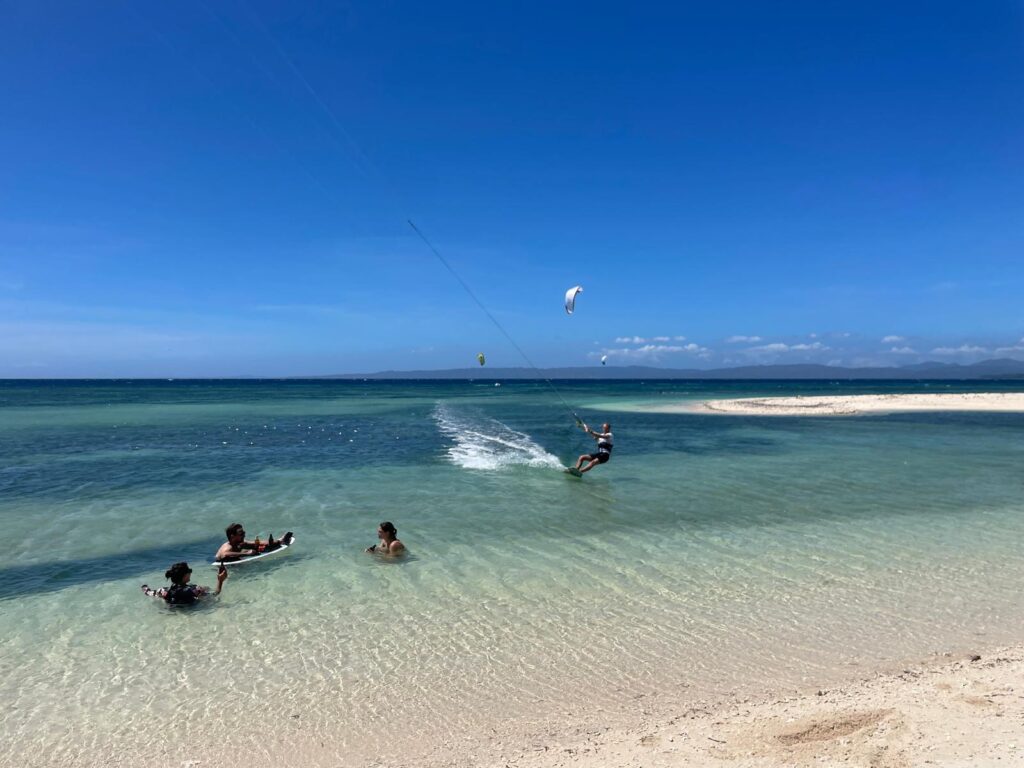
Kitesurfing in Boracay, Bulabog Beach
We based ourselves in Boracay for the bulk of our trip. It is the most famous kite spot in the Philippines for a reason, but it comes with its own set of pros and cons.
• The Vibe: The island is weirdly split up into two sides: one side is extremely touristy, while the other offers a much more tranquillo kitesurfing vibe. On the kite side, the trees are a bit close to the beach, and the water can get crowded with beginners.
• The Wind: Less consistent than usual during our stay, but when it blew, the spot was great.
• The Perks: Because I was working remotely, Boracay was fantastic. It has incredible infrastructure: strong Wi-Fi, consistent power, and plenty of great restaurants and facilities.
• Trip Highlights: We did an awesome downwinder with Isla Wing & Kite and took kitefoil lessons at Freestyle Kitesurfing—we highly recommend both! Also, on a no-wind day, do yourself a favor and buy a day pass to the Mövenpick Hotel. Total game-changer.
• Our Rating: 7/10 overall as a destination, but a solid 8/10 for kiting.
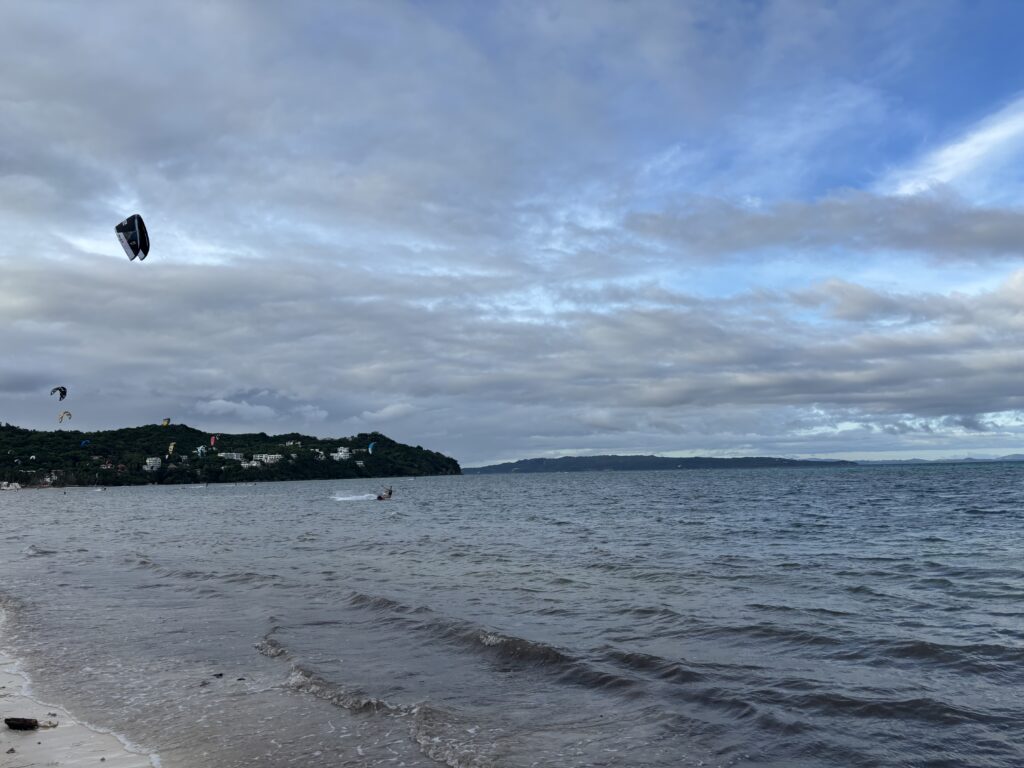
Kitesurfing in Siquijor
Next, we chased the wind to Siquijor. It is not widely known as a premier kiting destination, but it has a dedicated small community and two small kite schools.
• The Vibe: A stunning, tropical island that is blissfully less touristy than Boracay. We rented our own tuk-tuk to explore the island, which was an adventure in itself.
• The Wind: Very light. Expect breezes in the 16–20 knot range. We scored 2 good sessions in a 1-week span. The odds of getting skunked on wind here are pretty high.
• Our Rating: 8/10 as a travel and exploration destination, but a 6/10 for kiting due to the low wind reliability.
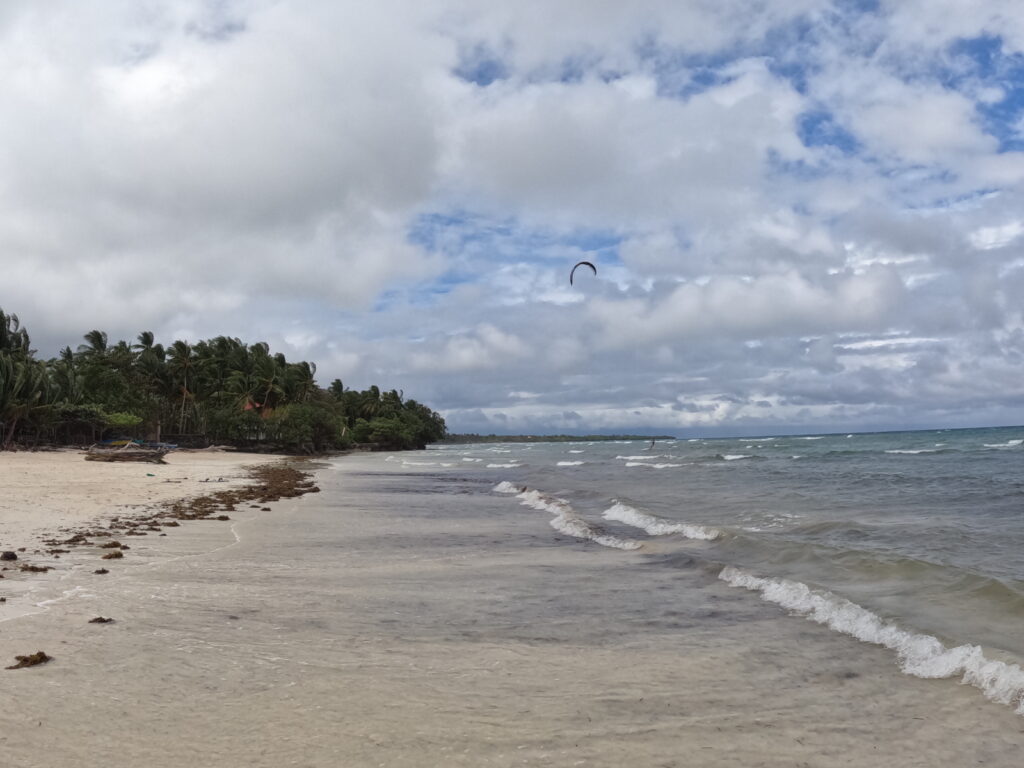
Kitesurfing in Palawan (Sibaltan)
We had read that kiting in Sibaltan was possible, and it absolutely is, though you need some luck.
• The Vibe: Very off-the-grid and remote, which we absolutely loved. There is a small, tight-knit kitesurf community and exactly one kite school. When the wind dies down, renting a scooter to explore Palawan or going diving are great alternatives.
• The Wind: We arrived right as a minor storm rolled through, giving us some great sessions. However, we got lucky; generally, the wind here is simply too light to kite reliably.
• Our Rating: 7/10 overall, and 6/10 for kiting (for the exact same reasons as Siquijor).

Tao Experience
Note: There is no kitesurfing on this leg of the trip, but we had to include it! We took a break from hunting wind to do an island-hopping expedition with Tao Experience, traveling from El Nido to Coron. While our kites stayed packed away, exploring the ultra-remote islands of Palawan and enjoying a complete digital detox was phenomenal. If you are in Palawan, this is a highly recommended side-quest.
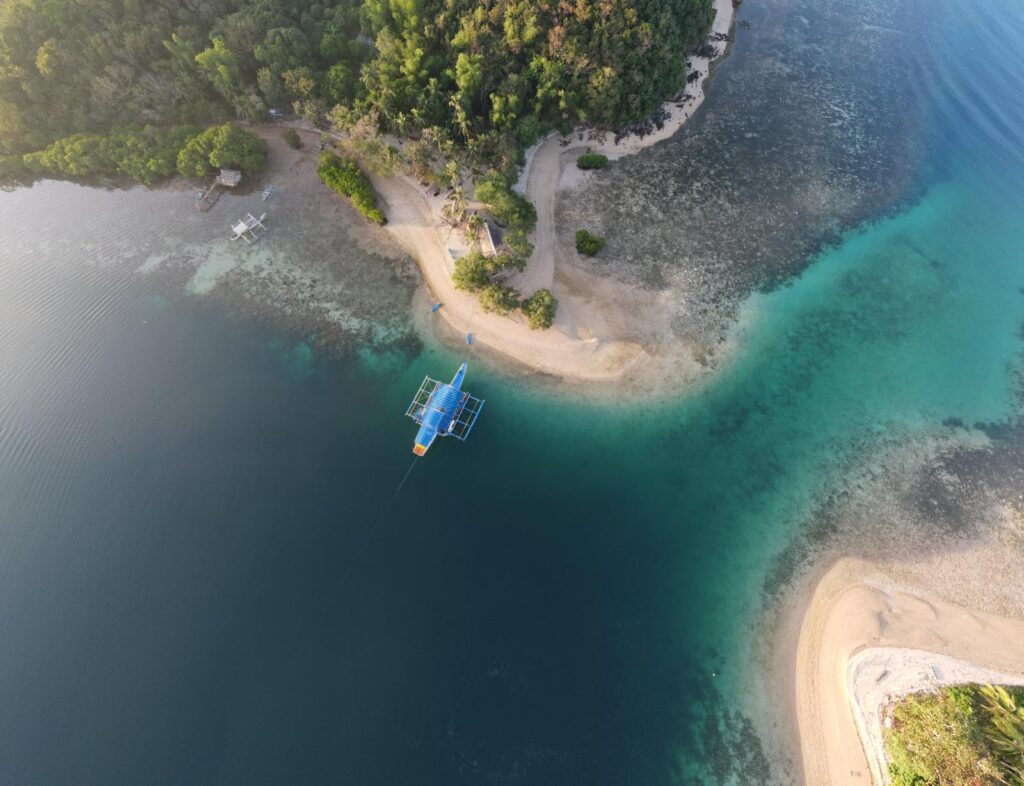
Kitesurfing in Mindoro
We saved the best for last. Kitesurf Mindoro was undeniably the highlight of our entire 8-week trip.
- The Vibe: Incredible community feel. The kite camp only consists of a few bungalows and a dorm, and everything—including the amazing food—is taken care of. Book early, because a staggering 75% of their guests are returning visitors. We did some of the most beautiful downwinders of our lives here.
- The Wind: Normally, Mindoro boasts the strongest winds in the Philippines, reliably blowing 24–30 knots and occasionally gusting up to 36 knots. We actually experienced uncharacteristically light wind during our stay, but we still rode every single day using our 9m², 10m², and 12m² kites.
- The Catch: Getting there is a massive hassle. The Bunso Ferry is unreliable, flights only run twice a week, and the alternative ferry from Boracay is notoriously bad at sticking to a schedule. Bring your patience—it is worth it.
- Our Rating: A perfect 10/10 for kitesurfing.
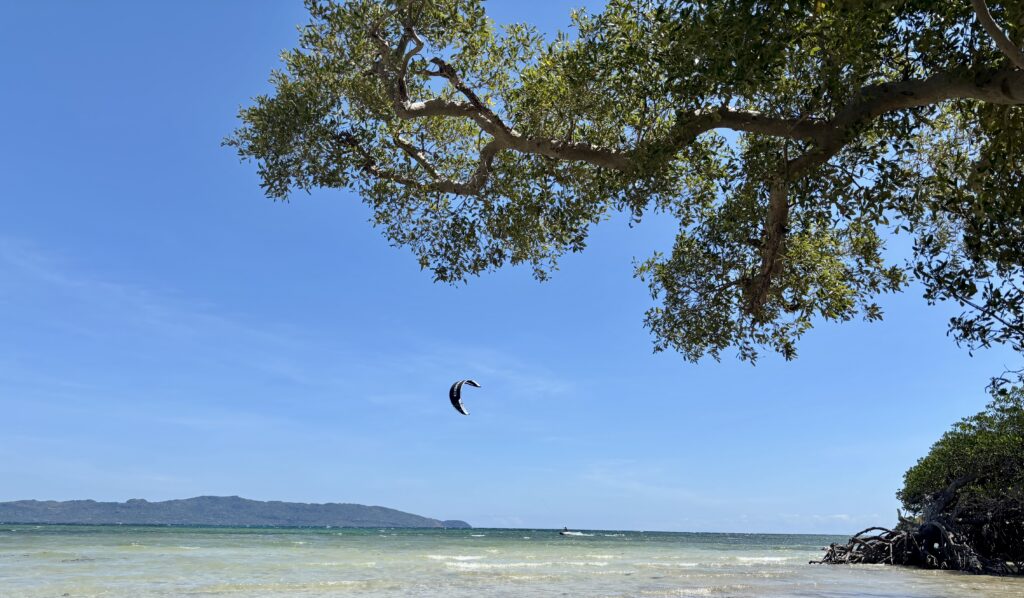
A Warning About Philippine Typhoons & Travel Disruptions
If you are planning an extensive Philippines kite trip, you must factor typhoons into your itinerary. Typhoons are frequent, and the Philippine Coast Guard is extremely strict regarding maritime safety.
Once a typhoon enters the area, all ferries and boats are immediately canceled by the Coast Guard. Do not plan your itinerary too tightly. You can easily get stuck on an island for days. To put it in perspective, some friends of ours booked a 10-day catamaran kite tour to remote spots, and it was completely canceled after day 3 due to a typhoon. Always have a buffer in your travel plans!
What’s Next?
After 8 weeks in the Philippines, we packed up our bags and headed to Vietnam. While kitesurfing on pristine tropical Philippine islands was an amazing experience, the wind just wasn’t as consistent or as strong as we were hoping for (though we may have just had bad luck with the 2026 season!). We crave slightly stronger winds, so we decided to chase the heavier gusts across the South China Sea.